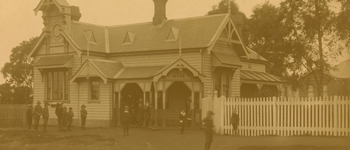
Dunkeld & District Historical Museum
Dunkeld & District Historical Museum
Scroll below to see a history of notable events, people and places in Dunkeld and District
Mount Sturgeon and Mount Abrupt were named by New South Wales Surveyor-General, Thomas Mitchell, when returning from his Australia Felix expedition in 1836.
Mount Sturgeon and Mount Abrupt were named by New South Wales Surveyor-General, Thomas Mitchell,...
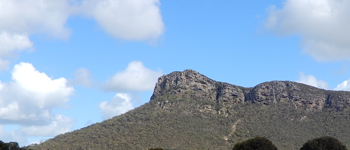
Donald Cameron was the first European recorded as taking up the Mount Sturgeon Plains Run (no 82) of 28,000 acres in 1838.
Donald Cameron was the first European recorded as taking up the Mount Sturgeon Plains Run (no 82)...
Robert Martin took up the Mount Sturgeon Run. He was originally a Scottish doctor who became an overlander, squatter and land developer in Heidelberg
Robert Martin took up the Mount Sturgeon Run. He was originally a Scottish doctor who became an...
James Robertson Unett was listed as taking up the "Victoria Valley Run". He sailed to Van Dieman's Land in 1838, and took up the "Victoria Valley Run" the following year, holding it until 1841.
James Robertson Unett was listed as taking up the "Victoria Valley Run". He sailed to Van Dieman's Land in...
Henry Dwyer acquired the "Victoria Valley Run". By 1852 the run was recorded as running 9,000 sheep, 500 cattle and 20 horses.
Henry Dwyer acquired the "Victoria Valley Run". By 1852 the run was recorded as running 9,000...
The Woolpack Inn, Dunkeld, built by Mr Robertson was opened in 1845, at the future site of Dunkeld.
The Woolpack Inn, Dunkeld, built by Mr Robertson was opened in 1845, at the future site of Dunkeld.
The first white child said to be born at Dunkeld was Robert Templeton, born on 8th February 1849.
The first white child said to be born at Dunkeld was Robert Templeton, born on 8th February 1849.
Thomas Robertson & Sons occupied the "Moora Moora Run", and in 1855 was also in occupation of the "Victoria Valley Run".
Thomas Robertson & Sons occupied the "Moora Moora Run", and in 1855 was also in occupation of the...
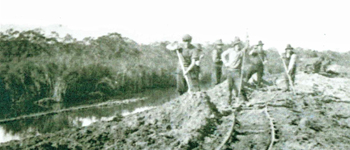
The first blocks of land in Dunkeld were sold.
The first blocks of land in Dunkeld were sold.
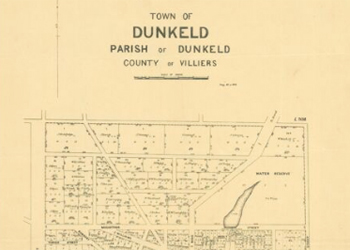
The settlement, known as Mount Sturgeon, was renamed Dunkeld
The settlement, known as Mount Sturgeon, was renamed Dunkeld
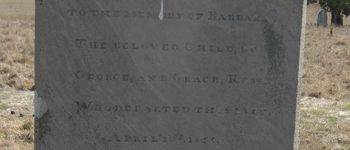
The first tombstone to be erected in the old Dunkeld cemetery was cut by William Bebe in April 1855 for Mr George Ross' child Barbara.
The first tombstone to be erected in the old Dunkeld cemetery was cut by William Bebe in April...
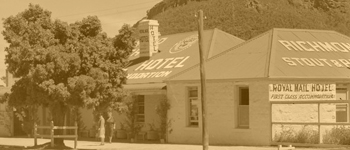
Royal Mail hotel was built in 1855. It was reported by William Mereweather, one of the early settlers, that when he arrived in 1855, the walls of the Royal Mail Hotel were just about 3 feet high.
Royal Mail hotel was built in 1855. It was reported by William Mereweather, one of the early...
Dunkeld School opened its doors as a National School for students to attend in October 1855
Dunkeld School opened its doors as a National School for students to attend in October 1855
Arrived at Dunkeld (then known as Mt Sturgeon) in 1855. Joseph kept a detailed diary of what he saw and what he knew, giving a great insight into the early days at Dunkeld.
Arrived at Dunkeld (then known as Mt Sturgeon) in 1855. Joseph kept a detailed diary of what he...
The first known Dunkeld Race Meeting was run on the 17th March 1856.
The first known Dunkeld Race Meeting was run on the 17th March 1856.
Stephen George Henty took up Mount Sturgeon Plains North and in 1863 Mount Sturgeon Plains South. He changed the property name to Warrayure to save confusion.
Stephen George Henty took up Mount Sturgeon Plains North and in 1863 Mount Sturgeon Plains South....
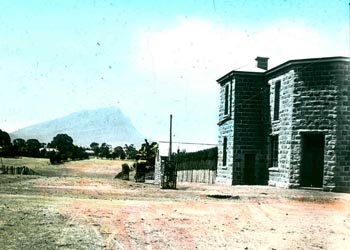
The two celled bluestone police lock-up building was constructed c1860's.The building forms part of an early police complex.
The two celled bluestone police lock-up building was constructed c1860's.The building forms part...
Marmaduke Fisher left a marvellous record of Dunkeld and the district in the 1860's in the fortnightly articles he wrote for the Hamilton Spectator under the pseudonym, "Mount Sturgeon". He had an excellent scientific training and loved teaching and passing on his knowledge. He taught at Dunkeld...
Marmaduke Fisher left a marvellous record of Dunkeld and the district in the 1860's in the...
Hugh Glass makes a fascinating study as he started behind a shop counter. He was known as the wealthiest man in the colony in the 1860's and faced disaster with the depression of the late 60's, with charges of bribery and corruption and finally death, possibly suicide.
Hugh Glass makes a fascinating study as he started behind a shop counter. He was known as the...
Census records indicate that Dunkeld now has 152 residents
Census records indicate that Dunkeld now has 152 residents
The Western Hotel was built by William Mitchell and licensed in 1863.
The Western Hotel was built by William Mitchell and licensed in 1863.
Family Inn, the grand 2 story building that sat where the present day Dunkeld Information Centre stands, was opened with a grand ball and supper on 11th September 1863. Mr James Gwyther was the first owner.
Family Inn, the grand 2 story building that sat where the present day Dunkeld Information Centre...
Blacksmith shops were operated in Dunkeld by the Womersley and Woodhead families.
Blacksmith shops were operated in Dunkeld by the Womersley and Woodhead families.
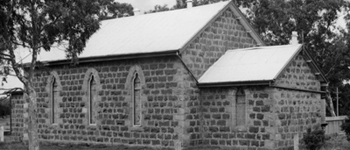
The bluestone Presbyterian Church was erected
The bluestone Presbyterian Church was erected
The Mount Sturgeon run was subdivided and one of the portions was acquired by the Armytage family.
The Mount Sturgeon run was subdivided and one of the portions was acquired by the Armytage family.
Construction started on the Mount Sturgeon Homestead.
Construction started on the Mount Sturgeon Homestead.
Samuel Woodhead opened a flour mill and a sawmill in Dunkeld in the 1860's, on land west of Fairburn Street, on the north side of Salt Creek.
Samuel Woodhead opened a flour mill and a sawmill in Dunkeld in the 1860's, on land west of...
The MUIOOF (Manchester Unity) Lodge was formed in Dunkeld on 23rd January 1868. It was still going in 1989. First members being William & John Templeton, Joseph Mereweather, George Docherty, Henry Cotton, James Gwyther, Wm Jones, James Harding and Angus McPhee.
The MUIOOF (Manchester Unity) Lodge was formed in Dunkeld on 23rd January 1868. It was still going in...
The Lodge of the Good Templar was opened in 1873 by Rev. Merriman.
The Lodge of the Good Templar was opened in 1873 by Rev. Merriman.
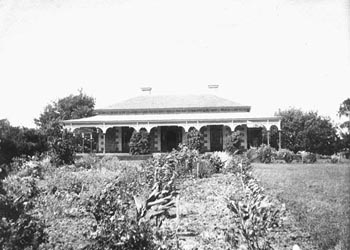
The Gums Homestead was built for William Ross, who owned the property from 1864 until his death in 1900. Architect was Joseph Reed of Reed & Barnes, Melbourne.
The Gums Homestead was built for William Ross, who owned the property from 1864 until his death in...
Railway completed Ararat to Dunkeld, opened on 12th April 1877
Railway completed Ararat to Dunkeld, opened on 12th April 1877
Head on collision between 2 work trains between Dunkeld & Hamilton, 12th June 1877
Head on collision between 2 work trains between Dunkeld & Hamilton, 12th June 1877
The Railway Hotel, Dunkeld was built by Edwin Collins in 1877 opposite the railway station. It was delicensed between 1920 - 1923.
The Railway Hotel, Dunkeld was built by Edwin Collins in 1877 opposite the railway station. It was...
The Colonial Bank, built on the corner of Parker and Sterling Streets was opened.
The Colonial Bank, built on the corner of Parker and Sterling Streets was opened.
The first Dunkeld Catholic Church was erected.
The first Dunkeld Catholic Church was erected.
The Eucalyptus factory situated near the Victoria Point road, that was opened in the early 1880s, closed about 1888 and the owner Mr Frost moved to Dunkeld.
The Eucalyptus factory situated near the Victoria Point road, that was opened in the early 1880s,...
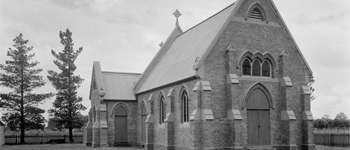
The first Anglican Church, Dunkeld was built from locally made bricks.
The first Anglican Church, Dunkeld was built from locally made bricks.
Census records indicate that Dunkeld now has 279 residents
Census records indicate that Dunkeld now has 279 residents
The first record found of the Dunkeld Football Club was 1886, when Dunkeld and Hamilton met at Moutajup.
The first record found of the Dunkeld Football Club was 1886, when Dunkeld and Hamilton met at...
The Dunkeld-Penshurst rail line opened March, then closed 7 months after opening.
The Dunkeld-Penshurst rail line opened March, then closed 7 months after opening.
The present Post Office was built by H.Kohn. The contract was signed on 12th February 1891 for a sum of 775 pounds.
The present Post Office was built by H.Kohn. The contract was signed on 12th February 1891 for a...
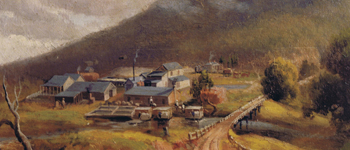
Henry O'Beirne and Dick Kennedy operated a fellmongery at Dunkeld on the Wannon River at the foot of Mount Sturgeon. The business was known as the Wannon Wool Scouring Works, being buyers of wool, hides, tallow, kangaroo, rabbit, possum and sheep skins
Henry O'Beirne and Dick Kennedy operated a fellmongery at Dunkeld on the Wannon River at the foot...
Dunkeld Hall Opening, with the foundation stone being laid by Harold Armytage on 27th September 1892. The hall was opened as a library and Mechanics Institute.
Dunkeld Hall Opening, with the foundation stone being laid by Harold Armytage on 27th September...
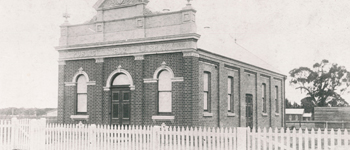
Extensions were made to the Dunkeld Hall.
Extensions were made to the Dunkeld Hall.
Mervyn Napier Waller CMG OBE was born at Penshurst. He was a noted Australian muralist, mosaicist and painter in stained glass and other media. He is perhaps best known for the mosaics and stained glass for the Hall of Memory at the Australian War Memorial, Canberra, completed in 1958.
Mervyn Napier Waller CMG OBE was born at Penshurst. He was a noted Australian muralist, mosaicist and...
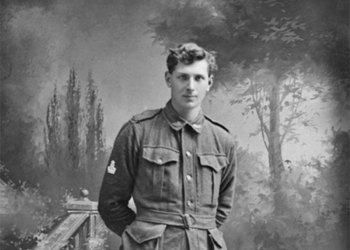
Clarence O'Connor, jockey, lost his life in a horrendous accident while riding in a horse race at the Dunkeld racetrack.
Clarence O'Connor, jockey, lost his life in a horrendous accident while riding in a horse race at...